
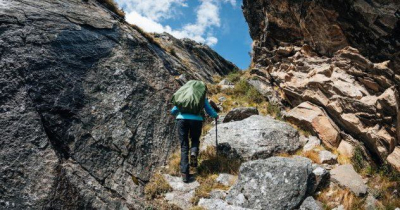
These ten trails span the globe, from Asia’s sacred peaks to North America’s desert labyrinths, each offering a unique blend of natural beauty, cultural resonance, and heart-stopping exposure. Whether it’s the vertiginous boardwalks of China, the engineered marvels of Spain, or the secluded canyons of Utah, every hike demands respect for both terrain and tradition.
Related: 10 Best Hiking Trails in America with Breathtaking Views
10 Mount Fuji, Japan
Mount Fuji: How to Climb Japan’s Most Famous Mountain
Climbing Mount Fuji 12,388 feet (3,776 m) each summer is both a cultural pilgrimage and a serious alpine undertaking. Thousands of climbers—from first-timers to seasoned alpinists—tackle trails like Yoshida and Subashiri between July and September. One international student group famously began their ascent at midnight, battling 31 mph (50 km/h) gusts and near-freezing temperatures to catch the Goraikō sunrise, sharing headlamps, medical supplies, and motivation en route. Despite well-maintained trails and mountain huts every few kilometers, risks abound: altitude sickness above 8,202 feet (2,500 m) can strike suddenly, storms appear without warning, and overcrowding fuels “bullet climbs” that leave hikers exhausted and vulnerable.
Local authorities now charge a modest climbing fee, enforce staggered nighttime closures, and strongly recommend at least one overnight stay in a 9,843 feet (3,000 m) hut to acclimatize. Essential gear includes warm layers, a waterproof shell, sturdy boots, and a reliable headlamp (with spare batteries). Climbers should reserve huts early, verify which trails are open, and pace themselves—aiming for “climb high, sleep low” if time allows, or at minimum, incorporating plenty of rest stops to reduce the chance of acute mountain sickness. [1]
9 Cascade Saddle Track, New Zealand
Cascade Saddle Route: Alpine Tramping (Hiking) Series | New Zealand
High in Mount Aspiring National Park, the Cascade Saddle Track rises to 3,852 feet (1,174 m), offering sweeping vistas of Mount Aspiring [13,232 feet (4,033 m)] and glacial valleys—but also sudden storms, snowfields, and avalanche-prone couloirs. Two trampers learned this the hard way when a late-spring snowstorm stranded them on the exposed saddle; they survived 36 hours by using their tent fly as shelter before rescue could reach them. Because November weather can feel like midwinter, the Department of Conservation (DOC) urges summer ascents (January–February) while keeping an eye on avalanche advisories and local updates.
Beyond reliable waterproofs and sturdy boots, hikers may need crampons and an ice axe well into late January. Navigation demands topographic maps, compass or GPS proficiency, and backup batteries. Always file an itinerary with DOC rangers, carry 4 L of water per person per day, and consider a personal locator beacon—only experienced trampers with solid alpine skills should attempt this route. [2]
8 Orla Perć (Eagle’s Path), Poland
Orla Perć, Tatra Mountains – WE THINK TOO MUCH AND FEEL TO LITTLE
Orla Perć in the Tatra Mountains is Europe’s most notorious ridge trail, a 14 km scramble above 7,546 feet (2,300 m) with chains, ladders, and 328-foot (100-meter) drops. Since the early 1900s, over a hundred hikers have perished here—among them a solo trekker caught in a thunderstorm at Zawrat Pass, who clung to dripping chains until fellow climbers shared rope and guided him to safety. Such incidents underscore both the route’s raw challenge and the tight-knit community spirit in the Tatras.
Attempt only between late June and mid-September, when snow is minimal, and chains aren’t ice-coated. Helmets, gloves, sturdy boots, and a via ferrata set (harness and lanyard) are non-negotiable. With 10–12 hours required to traverse the full ridge, start well before dawn. Inexperienced hikers should hire a licensed mountain guide, and everyone must monitor rapidly changing forecasts to avoid being caught in storms above the tree line. [3]
7 Barranco del Infierno, Tenerife, Spain
Exploring Tenerife’s Stunning Barranco del Infierno Hike
“Hell’s Gorge” winds 4 miles (6.5 km) through volcanic cliffs to Tenerife’s highest waterfall [656 feet (200 m)], once closed after a 2009 fatality, and is now regulated with helmets, guide quotas, and digital entry logs. A family from Madrid experienced the transformation: their skeptical teens became spellbound by endemic flora and the rare Tenerife bluet butterfly before cooling off beneath the cascade’s icy mist. Controlled access (300 daily hikers) and online reservations ensure both safety and conservation of this biodiverse ravine.
Trail closures during heavy rain guard against rockfalls, and children under 5 are prohibited (under-18s require adult supervision). Hikers should book well in advance, respect protected species by staying on the path, and carry out all litter. Combined with clear signage and mandatory safety gear, these measures have made Barranco del Infierno a thrilling yet responsibly managed adventure. [4]
6 The Maze, Canyonlands NP, USA
The Maze: Canyonlands National Park, Utah, USA [Amazing Places 4K]
The Maze, one of America’s remotest backcountry regions, tests even veteran canyoneers with unmarked routes, scarce water, and a rugged 4×4 approach that can wash out overnight. One five-day loop attempt turned into a sixth as monsoon-swollen crossings forced improvisation; the group survived by rationing water, camping in an alcove, and finally using a talus slope to regain their trailhead. Their story highlights the Maze’s beauty and brutal isolation—where self-reliance isn’t optional.
Success here hinges on a high-clearance 4×4 (with recovery gear), multiple navigation tools (satellite GPS, USGS maps), and at least 4 quarts (4 L) of water per person per day with robust filtration. Permits—secured months in advance—must be filed with park rangers, along with a detailed itinerary. Only those with extensive desert-canyon experience, route-finding skills, and emergency-ready kits should attempt this labyrinth. [5]
5 Aonach Eagach Ridge, Scotland
The Narrowest Ridge on Mainland Britain – The Aonach Eagach Ridge
The 1.24-mile (2-kilometer) Aonach Eagach Ridge in Glen Coe is Britain’s narrowest mainland crest, demanding exposed scrambling over rock features like Devil’s Staircase, with no easy escape once committed. Two Munro-baggers faced dense September mist halfway along; by roping up, using helmets, and moving in unison hand-over-hand, they navigated to safety near the Glen Coe Cowshed Bothy—demonstrating meticulous planning and teamwork.
Tackle the ridge only in dry conditions; winter ascents require full ice-axe and crampon proficiency. A party of at least two (ideally three) should carry a 20 m rope, slings, quickdraws, and helmets. Always consult Mountain Rescue logs for recent incidents, consider hiring a local guide if uncertain, and inform someone of your plans before departure. [6]
4 Half Dome via the Cables Route, Yosemite NP, USA
Half Dome Cables ALL THE WAY UP
Leave a Reply