
Published Apr 19, 2026, 11:45 AM EDT
Adam has a degree in Engineering and has a life-long interest in technology. He has been writing for over a decade for various print and online publications, with a focus on consumer tech. He joined How-To Geek in 2024 while working at Pocket-lint.
As well as being a long-term fan of Apple products, he also has a strong interest in smart home tech, running a Home Assistant server at home to automate all his smart home devices. He believes that the ideal smart home should work with minimal interaction from the user, with automations running as if by magic rather than requiring you to push buttons on a control panel. You can find more of his work on Muck Rack.
There are a lot of great smart home devices you can buy right now, but there are some I wouldn’t touch with a ten-foot pole. These are some of the devices I would definitely avoid.
Related
7 Smart Home Devices I Wouldn’t Buy Again (and What I’d Get Instead)
Not every smart home purchasing decision turns out to be that smart.
Cloud-only devices with no local control
The risk of building on someone else’s servers
There are plenty of examples of why using smart home devices that rely on cloud services is a bad idea. The most recent example is Belkin shutting down its cloud services for its Wemo devices. The upshot is that if you have Wemo products, you can no longer control them via the app or using voice assistants, and you can no longer control the devices when you’re away from home.
If you buy a device that relies on cloud services, then you’re always at risk. If the company pulls support, you’re left with a product that’s essentially useless. There’s also the risk that a company may start to charge you a subscription to access its cloud services, and you’ll have to start paying to use a device you already bought.
Your smart home devices should always offer at least some form of local control, so that you can use them without relying on cloud services. That way they won’t suddenly turn into expensive paperweights.
Subscription locked cameras and doorbells
Why they’re ultimately a trap
Credit: Ring
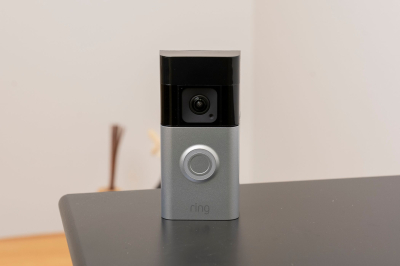
Another group of devices that can often require a subscription is smart cameras and video doorbells. With many popular brands, such as Ring, you need a subscription to access some of the more useful features, such as video recording and history, smart alerts, and more.
You already pay to buy these devices, and the subscription means that you’ll keep on paying as long as you want to use them, which can add hundreds of dollars to the final cost. Prices also continue to rise; you may end up having to pay more to use the features you’re already using.
Many of these features also require that the recordings and streams from your cameras end up on third-party servers, where they may not always be completely secure. There are plenty of alternative options that offer local storage and the full range of features without a subscription fee.
Reolink Video Doorbell (Battery)
Resolution
2K
Power Source
Battery
Reolink’s battery-powered Wi-Fi video doorbell is a great way to know who’s outside. With a 2K resolution and a 150°x150° head-to-toe view, this video doorbell can be powered either over battery or wired, depending on your existing setup.
Wi-Fi sensors
The wrong protocol for the job
Credit: Corbin Davenport / How-To Geek
Sensors are the key to good smart home automation. Being able to manually control your smart home is great, but having your smart home act without any input at all is even better. Sensors such as temperature sensors, motion sensors, and contact sensors can help this to happen by triggering your automations.
There are plenty of Wi-Fi sensors available, but these are a bad choice. The more Wi-Fi sensors you add to your home, the more congested your network becomes, with every Wi-Fi device in your house fighting over the bandwidth. Wi-Fi sensors are also power hungry, so they usually need to be plugged in.
There are often better options, such as Zigbee sensors. These are low-power enough to run for a long time on battery power, so you can place them almost anywhere you want. The mesh nature of Zigbee means that you don’t have to worry as much about how close they are to your router, and it takes some of the pressure off your Wi-Fi network.
Smart fridges
More money, less longevity
Credit: Samsung
I’ve never understood why anyone would want a smart fridge. It feels like the worst example of a solution looking for a problem. Even if you do like some of the features, however, they’re probably not worth the cost.
A smart fridge can cost several times as much as a standard dumb fridge, so you need to decide whether having an iPad strapped to the front of your fridge or cameras inside the door is really worth all that money. Additionally, they soon go out of date. Software support can end much sooner than the life of your fridge, and then you end up with a very expensive dumb fridge on your hands.
Cheap off-brand smart devices
You get what you pay for
Credit: Lucas Gouveia / Shutterstock / How-To Geek
There are plenty of sites that sell smart home devices for insanely low prices. If you’re looking for something simple, like a temperature sensor, and you’re not hugely fussed about it being wildly inaccurate, then you can find some real bargains.
However, it’s usually the case that you get what you pay for. A $4 smart plug may seem like a bargain, but it may also have unreliable connectivity, rely on cloud services, have poor security, and could even be a fire hazard. While cheap devices can be useful, when you’re buying something that you need to rely on in your smart home, it’s best to opt for products that you can trust.
Most Matter devices
The platform still isn’t mature
Credit: Nathaniel Pangaro / How-To Geek | Apple | Amazon | Google | Matter
Matter was meant to be the protocol that would save the smart home by allowing smart home devices to use a unified method of communication instead of everything using its own proprietary methods. While it’s come a long way, it’s still not lived up to its promise just yet.
There have been some significant updates recently, with support for devices such as cameras and soil sensors added in Matter 1.5, and further improvements have recently been added in Matter 1.51.
This is the problem, however. Things are moving quickly, which means that a Matter product you buy today might not support the features that are added in the future. Currently, opting for more established options such as Zigbee and Z-Wave may offer better reliability.
Be smart about your smart home purchases
Don’t get me wrong; the state of smart home tech has never been better. There are some amazing products out there that can do an incredible job and still respect your privacy. The key is to choose wisely, because the best smart home devices are the ones you rarely think about; it’s the worst ones that keep reminding you that they’re there.
Leave a Reply