
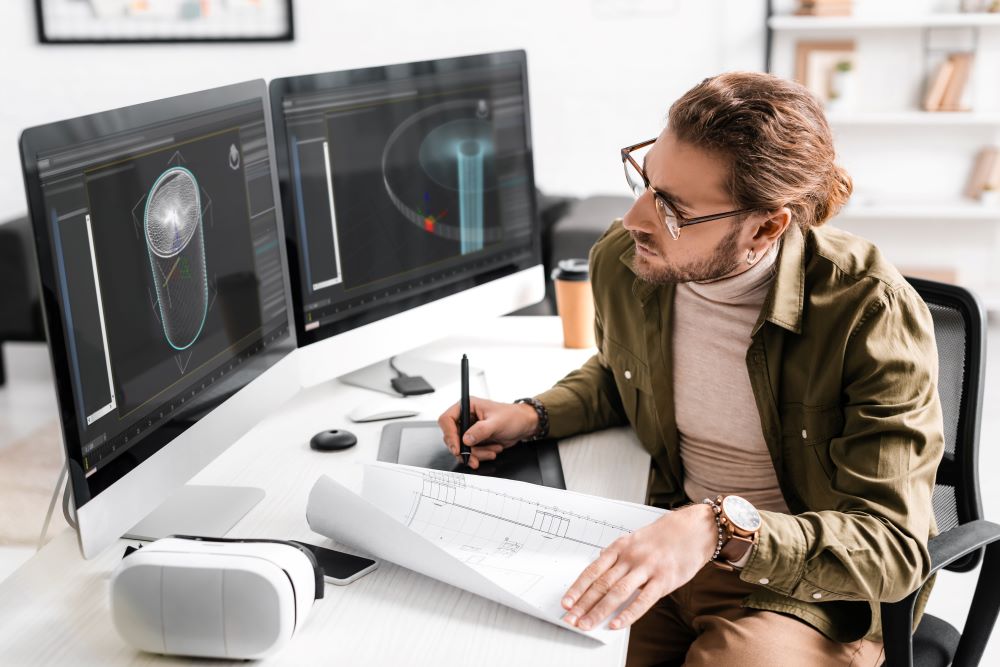
The field of 3D art is a constantly evolving industry, and it requires a wide range of skills to be successful. One of the most important things you can do as a beginner is to develop a strong foundation in traditional art skills. This includes drawing, painting, and sculpture, which can help you develop a sense of form, proportion, and composition that will be invaluable in 3D design.
Tomislav Belacic, a well-known 3D generalist, stresses the importance of mastering these traditional art skills before moving on to more technical aspects of 3D design. “The most important thing is to have a strong foundation in the basics of design, composition, and color theory. If you can’t draw, you can’t 3D model,” he says.
Once you have a strong foundation in traditional art skills, it’s time to start learning the technical skills needed to become a 3D artist. Here are some key skills to focus on:
3D modeling: This is the core skill of 3D art, and you’ll need to learn how to create models using software like Autodesk Maya, Blender, or 3ds Max. This involves using a range of tools to create objects, characters, and environments in 3D space.
Texturing: Texturing is the process of adding surface detail to 3D models, and it requires an understanding of color, texture, and lighting. Adobe Photoshop is the most popular tool for this.
Lighting and rendering: Lighting is essential in 3D art, as it can bring your models to life. You’ll need to learn how to create realistic lighting and use rendering software like Arnold, V-Ray, or Mental Ray to generate the final image.
Animation: If you’re interested in creating animations, you’ll need to learn how to use keyframes, motion paths, and rigging tools to bring your models to life.
Compositing: Compositing is the process of combining multiple 3D elements into a final image or animation. This involves using software like Adobe After Effects or Nuke to create complex visual effects.
When it comes to software recommendations, Autodesk Maya and Blender are two of the most popular tools in the industry. Maya is widely used in the film and gaming industries, while Blender is a free and open-source software that’s gaining popularity among independent artists.
As for hardware recommendations, you’ll need a powerful computer with a good graphics card and plenty of RAM. Tomislav Belacic recommends investing in a Wacom tablet to help you create more natural and precise strokes when drawing and sculpting.
It’s worth noting that becoming a 3D artist takes time and dedication, and it’s important to be patient with yourself as you learn new skills. As Tomislav Belacic says, “It’s important to be persistent and patient, and to never give up. It’s a difficult field, but it’s also incredibly rewarding.”
In addition to developing your technical skills, it’s also important to build a portfolio of your work. This can help you showcase your skills to potential employers or clients. You may also want to consider networking with other artists in the industry and attending industry events to stay up-to-date with the latest trends and techniques.
In summary, becoming a 3D artist requires a combination of traditional art skills, technical skills, and patience. By focusing on developing these skills and building a strong portfolio, you can turn your passion for art into a rewarding career.
Leave a Reply