
The United States has a water problem. It’s scarce in many areas and is expected to become scarcer as climate change intensifies and data centers consume massive quantities of water. About 8% of people in the contiguous U.S. already live in areas with chronic water shortages. And drought is expected to intensify in the decades ahead, especially in the West and Southwest. You would think wetter storms driven by climate change would help, but scientists say soil and groundwater do not store precipitation from intense storm bursts efficiently. Desalination and long-distance water transfers are two potential solutions, but both are costly and energy intensive. Despite the bleak outlook, there may be an answer to water worries hovering right over your head.
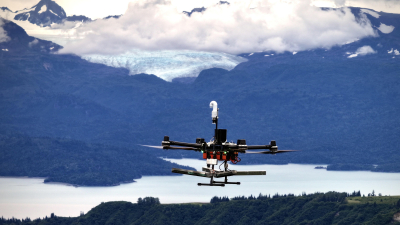
California startup Rainmaker is using drones to seed clouds and provoke rainfall. Rainmaker says during 10 seeding flights in Alaska in August 2026, its team helped produce an estimated 19 million gallons of additional rainfall in just over three hours. Rainmaker drops silver iodide into clouds, where it helps ice crystals form, grow, and eventually fall as rain. The company’s drones are made to handle the icy conditions at 15,000 feet.
Cloud seeding isn’t new. It’s been done in the U.S. since the 1940s, often using planes. The UAE has been seeding clouds since 1990. Though its current operations still rely on piloted aircraft, the country funded a University of Colorado project to develop a cloud seeding system using autonomous drones. The drones can detect an ideal portion of cloud for seeding, fly to it, and seed it based on local conditions. This approach would keep pilots out of dangerous conditions.
Drought-fighting drones face limits and pushback
Cloud seeding has its flaws. The biggest issue is you cannot create rain. You need existing clouds to produce more precipitation. During dry stretches or in deserts, there may be no clouds to seed. Even in favorable conditions, the results may vary. A 2024 governmental review of several studies found cloud seeding could produce anywhere from 0% to 20% more precipitation. Rainmaker says drones could improve those odds by targeting the parts of a cloud with the best conditions for seeding, then using radar and satellite data to track how much precipitation the seeding produced. That data can help Rainmaker refine where and when to seed future clouds, which is important in an era when weather changes quickly.
There has been pushback over the use of cloud seeding. Three states have passed bills banning weather modification. Dozens of other states have considered legislation. Alaska hasn’t, but that could be about to change. Local authorities were surprised to find out about an out-of-state company controlling the weather. They’re now pushing for stronger state oversight of weather modification. A state lawmaker also drafted legislation requiring local notification that she promises to introduce if reelected. Rainmaker says the state signed off before testing began but acknowledges it should have done more local outreach first.
Lawmakers also expressed concern about silver iodide. For weather modification, it’s key to inducing rain and was once tested as a way to weaken hurricanes. The U.S. Government Accountability Office and World Meteorological Organization have not found significant health or environmental problems related to the use of silver iodide. Both organizations suggest more research is needed if quantities increase. While weather modification efforts are being roadblocked in the U.S., China is using the practice to increase rainfall and reduce pollution.
Leave a Reply