
Sjoerd Van Der Wal/Getty Images
We may receive a commission on purchases made from links.
Nothing lasts forever, especially in the world of smart home technology. It feels like every year I head to CES to take in all the strange gadgets and get the full spiel from dozens of companies about the latest and greatest in smart home innovation. Some of these become essential smart home gadgets and revolutionize the industry, while others never quite make it to market. Then there are the gizmos that arrive and find a devoted user base, only to become extinct in the constantly evolving smart home landscape.
Maybe their customer base peaked early, or maybe they weren’t priced correctly and consumers passed on the investment. Perhaps they were outgunned by other devices with massive corporate backing, or simply ahead of their time. We’ve all probably been in the position at one point. Finding a gadget that we vibe with and love using, like Wemo smart plugs and the 1st-gen Nest thermostat, only to see that dreaded end-of-life email hit your inbox. These smart home gadgets might be unsupported, but they remain fondly missed.
Logitech Harmony remote
If you’re on the internet long enough, you’re sure to run into people singing the praises of the Logitech Harmony remote. An almost legendary piece of smart home technology, the Harmony was so popular that you’d be hard-pressed to find a Best Gifts For Dad article that didn’t feature it in the top spot for over a decade in the early 2000s. What made this Logitech device so special was how it could consolidate all of your devices into a single remote control.
No more having to reach for a controller for each piece of equipment, with the Harmony even working as a remote for smart home devices. You could set program functions for several devices at once, and with the Harmony Hub, control other systems using Bluetooth and WiFi. But in 2019, Logitech stated that the Harmony brand was considered a small business, and one that was becoming irrelevant.
Although Logitech stopped making universal remotes, they remain popular with online groups dedicated to keeping these legacy remotes alive. And new companies have steeped in to fill the gap left by Harmony, like the SofaBaton X2 universal remote with a built-in screen and extended range hub control.
Leeo Smart Alert nightlight
Discontinued in 2019, the Leeo Smart Alert nightlight is a great example of unsupported smart home technology that once had a devoted user base. It plugged into a wall outlet and functioned as a traditional nightlight, but also served as a connected detector that could monitor for alarms going off — including CO and smoke— then message you via an app. This smart nightlight would even record audio of the alarm so could easily identify it. And if you didn’t respond, Leeo would call the numbers on your emergency contact list until it reached someone.
The problem was in the costs of the third-party cloud-based services that Leeo used, as the nightlight was $50 and had no ongoing subscription fees. This consumer-friendly business model wasn’t enough to sustain Leeo with only a single product line. Today, devices like the Kiddie smart smoke detector alert you when smoke or carbon monoxide is sensed, but there is a subscription cost and unlike the Leeo device, no nightlight.
Apple HomePod (1st Gen)
James D. Morgan/Getty Images
Introduced at Apple’s WWDC show in 2017, the HomePod was the company’s take on the smart speaker. It was initially priced at $349, but lacked essential features upon launch, like stereo sound, multi-room playback, and integration with third-party apps. The device also never got Bluetooth support for playback, relying instead on AirPlay 2. This left some unimpressed with one of Apple’s early entries into the smart home space. But for those that took the leap and could wait for a complete feature set, the HomePod found plenty of fans.
A smaller HomePod mini was launched in 2020, but lacked the bass that the original provided. And then, in 2021, the first-gen HomePod was discontinued altogether. Some claim that the technology inside the original Apple HomePod is superior to that of the second-generation version that arrived in 2023, even suggesting that Apple missed the mark not marketing to audiophiles more directly. First-gen HomePod speakers sell on the used market for around $150, and remain popular for that iconic Apple aesthetic.
Belkin Wemo smart plugs
Smith Collection/gado/Getty Images
Wemo from Belkin isn’t a singular product, rather a series of smart home devices. In January of 2026, Belkin shut down support for a number of these Wemo products, including smart plugs and switches. While Wemo smart plugs will continue to function as traditional plugs, the cloud-based smart capabilities on several older models like the Wemo Mini Smart Plug and Wemo Outdoor Plug will no longer function. These Belkin devices were well-liked and positively reviewed over the years for allowing users to easily turn off power-sucking devices at night, handling scheduling for Christmas lights, and automatically running air purifiers.
With the brand’s Insight smart plug, users could even monitor energy consumption, something no longer possible as support for it was killed off. A smart plug is one of the easiest and cheapest way to get into the smart home ecosystem, so it’s no surprise that many jumped in through the Belkin Wemo line. Thankfully, there are plenty of other options on the market, like the TP-Link Tapo, but it just goes to show that a reliance on the cloud for your device, no matter how popular, can come with future headaches.
Nest Thermostat (1st & 2nd Gen)
Christopher Snape/Getty Images
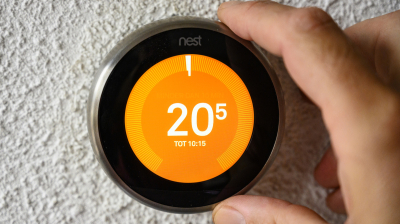
You might think that with a company as large as Google, its smart devices would be safe from going unsupported. However, Google is actually well-known for dropping product support, even those they paid a fortune to obtain. In fact, there is a website dedicated to cataloging this so-called Google graveyard. The Nest thermostat is one such example of a smart home product that many loved and reviewers raved about when it was released, only to be later discontinued. Users liked the simple interface and its learning features.
The thermostats became so popular that Google bought Nest in 2014 for $3.2 billion, a huge sum of money when you consider that Ecobee, a major competitor in the smart home space, was purchased in 2021 for $770 million. But Google discontinued its Nest brand and moved future devices into its Google Home ecosystem. Fans of those early Nest devices can at least continue to use them as traditional thermostats, minus the smart features. Thankfully, options like the Amazon smart thermostat and Ecobee Essential smart thermostat provide alternatives for consumers.
Methodology
Champpixs/Getty Images
When looking back at the smart home devices that we miss, we went directly to the source, looking to users who shared their experiences online across forums and social media sites such as Facebook and Reddit. Expert product reviews of the era were pulled in to get a better feel of each gadget’s importance in the cultural zeitgeist. Lastly, we dove into current communities that are not only continuing to sing the praises of these dead gadgets, but trying to keep them alive.
Leave a Reply